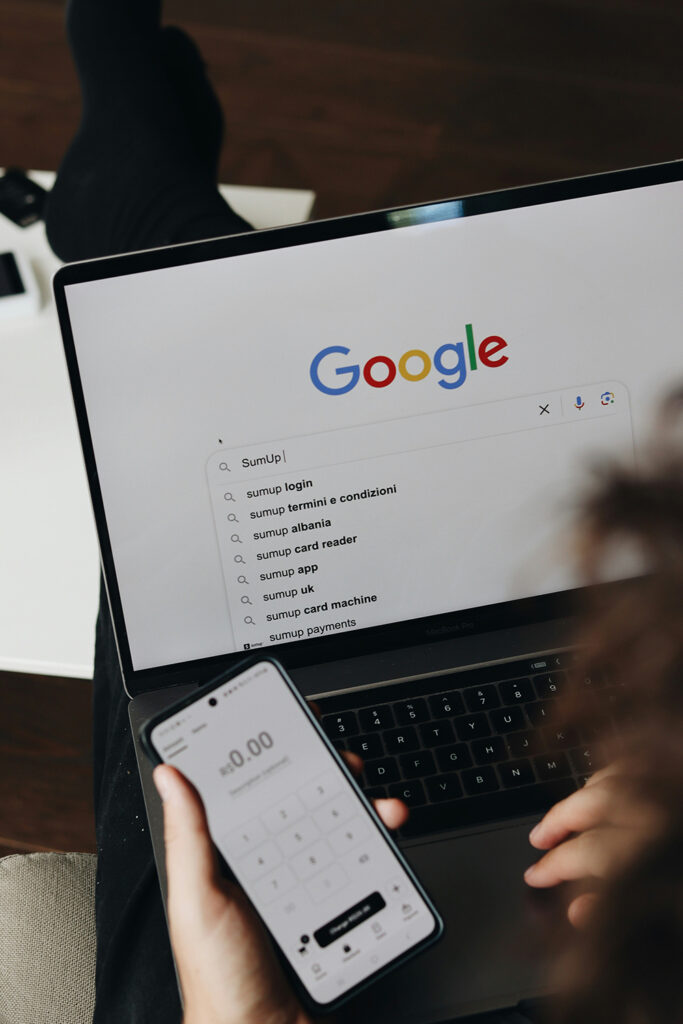
When someone needs a service, they don’t flip through pages anymore – they search. And now, they’re not just using Google. They’re also getting answers from AI tools and smart search features that pull businesses directly from websites, listings, and online content.
That’s where SEO comes in. It helps your business show up in search results when people are actively looking, whether they’re typing into Google or asking an AI assistant for recommendations.
Good SEO is about more than rankings. It’s about making your website clear, helpful, and easy for search engines and AI systems to understand. That includes improving your site content, strengthening your local presence, and building trust so your business gets recommended more often.
SEO strategies are especially important for businesses that want to reach a wider audience online, compete in search results nationwide (or globally), and attract customers beyond just their local area.
Build a search-ready foundation that helps your website perform in Google and AI-powered search results.
A strong SEO strategy starts with how your website is structured and understood by search engines. This includes technical audits, crawlability improvements, site speed optimization, and fixing issues that prevent your pages from ranking.
We optimize for SEO and emerging AI search behavior, where platforms pull answers directly from well-structured, trustworthy websites.
Ranking today isn’t just about keywords – it’s about clarity, relevance, and authority. We optimize your website content so search engines and AI systems can easily understand what you do, who you help, and why you should be recommended.
Getting traffic is only part of SEO; what happens after someone lands on your site is just as important.
We refine service pages, calls-to-action, and user experience to reduce friction and increase engagement. That includes improving page layout, trust signals, messaging clarity, and mobile performance.
From a business standpoint, SEO is what keeps you consistently visible without relying only on ads or short-term campaigns. It helps your brand show up when people are actively searching for what you offer, which means the traffic you get is more intentional and more likely to convert. Over time, this builds trust, credibility, and a steady flow of leads.
SEO also directly impacts how your content is interpreted by AI tools and modern search experiences. As search engines evolve, AI systems pull information from websites that are clear, well-structured, and authoritative. If your site isn’t optimized, you risk being left out of these new “answer-based” results even if your services are exactly what someone is looking for.

We evaluate core technical factors like site speed, mobile usability, indexability, crawl errors, internal linking structure, and overall site health as well as how your competitors are ranking and opportunities.
Once we understand the current state of your site, we build a strategic keyword and content plan designed around how real users are searching today, including traditional search and Ai-driven queries.
We optimize your website so it can fully perform in search engines and AI-powered discovery tools. This includes refining title tags, meta descriptions, headers, internal linking, and page structure.
SEO doesn’t stop at optimization, it requires ongoing authority building and performance refinement. This phase focuses on strengthening your domain through high-quality backlink strategies, improving content, and expanding authority.
Before we make any changes, we start by looking at how your website is actually performing today. This helps us figure out what’s working, what’s not, and where you’re missing opportunities to show up in search results.
Once we understand where things stand, we build a clear plan for how your website should show up in search results. This step is all about matching your content to what real people are actually searching for.
Now we start improving your actual website so it can rank better and perform better in search results. This is where we fine-tune the details that help search engines understand your content.
SEO isn’t something you set up once and forget—it needs ongoing attention to keep growing. This step focuses on building authority and improving results over time.
| Area | SEO (Organic Search) | Local SEO |
| Primary Goal | Increase visibility in national or global search results and drive organic traffic to a website | Increase visibility in local search results, map packs, and location-based searches |
| Target Audience | Anyone searching online regardless of location | People searching within a specific city, region, or nearby area |
| Search Results Focus | Google organic listings, blog results, service pages, AI-generated search answers | Google Maps, local 3-pack results, location listings |
| Keyword Strategy | Broad, industry-based, informational, and high-intent keywords (e.g., “SEO services,” “marketing agency”) | Geo-targeted keywords (e.g., “SEO agency in Salt Lake City”) |
| Website Focus | Full website optimization, content depth, and topical authority across multiple pages | Location pages, service area pages, and local landing pages |
| Google Business Profile | Not required or used as a ranking factor | Critical ranking factor for visibility in maps and local results |
| Content Strategy | Blog content, service pages, guides, and authority-building content clusters | Location-specific content, service + city pages, localized FAQs |
| Ranking Factors | Site authority, backlinks, content quality, technical SEO, user experience | Proximity, relevance, reviews, Google Business Profile optimization, local citations |
| Backlinks | High-quality backlinks from industry-relevant websites and authoritative domains | Local directories, community links, and location-based citations |
| Reviews & Reputation | Helpful but not a core ranking factor | Major ranking factor influencing map visibility and trust |
| Technical SEO Role | Very important (site speed, indexing, structure, schema) | Important, but balanced with local signals and listings optimization |
| AI Search Impact | Strong focus on structured content, authority, and topical depth for AI-generated answers | Strong focus on structured business data, reviews, and location accuracy for AI recommendations |
| Best For | Businesses targeting broader markets, online services, or scaling beyond a local area | Brick-and-mortar businesses, service-area businesses, or location-based providers |
Build your brand. Strengthen your message. Expand your reach with integrated marketing services that help you accomplish your goals.
SEO (Search Engine Optimization) is the process of improving your website so it shows up higher in search results on Google and other search engines. When done right, SEO helps people find your business when they’re actively searching for your services. Instead of relying only on ads or referrals, SEO helps you get consistent organic traffic over time.
Paid ads give you immediate visibility, but only as long as you keep paying. SEO focuses on long-term visibility by improving your website so it ranks naturally in search results. Once your pages start ranking, you can continue getting traffic without paying for every click. Many businesses use both together for the best results.
SEO is not instant. Most websites start seeing early improvements within 2–3 months, but stronger results usually take 4–6 months or more. It depends on your industry, competition, and the current state of your website. SEO builds over time, and the results tend to grow the longer you invest in it.
A strong SEO strategy usually includes keyword research, technical website improvements, content optimization, on-page SEO updates, and authority building. It also includes tracking performance so we can adjust the strategy based on what’s actually working.
In most cases, yes. SEO often involves improving your existing pages, adding new content, and fixing technical issues that may be holding your site back. Even small changes to structure, wording, or speed can make a big difference in rankings over time.
Yes, but it may take a little longer to see results. New websites don’t have much authority yet, so SEO focuses on building a strong foundation, good content, proper structure, and technical setup. Over time, your visibility grows as search engines start trusting your site.
On-page SEO refers to everything you can control directly on your website. This includes page titles, headings, content, internal links, images, and metadata. It helps search engines understand what each page is about and when to show it in search results.
Technical SEO focuses on the behind-the-scenes parts of your website that affect performance. This includes site speed, mobile usability, indexing, crawl errors, and overall site structure. If your website has technical issues, it can be harder for search engines to rank your pages, even if your content is good.
SEO success is measured through things like keyword rankings, organic website traffic, and most importantly, leads or conversions. Getting traffic is good, but the real goal is bringing in visitors who actually become customers.
Yes. In fact, it’s becoming even more important. AI tools and modern search engines pull information from websites that are well-structured, trustworthy, and clearly written. Good SEO helps ensure your content can be found, understood, and included in these AI-generated answers.